Why Labs & Facilities Fail Hazardous Waste Audits (And How to Fix It)
3 min read

Waste audits are among the most demanding events for EHS, lab operations, and compliance teams. Somewhere in the lab or facility, there’s almost always a half-full drum no one remembers, a handwritten label so faded it's unreadable, a missing waste log entry, or a single container everyone keeps avoiding.
Most facilities fail audits because outdated, manual waste programs cannot meet current regulatory requirements. Inspectors often encounter fragmented spreadsheets, paper logs, handwritten labels, and disconnected systems.
Frontline staff may follow proper procedures, but without documentation, compliance cannot be demonstrated during a hazardous waste audit.
Inspectors review records, not intentions. If documentation does not clearly show what occurred, when, and who was responsible, it is considered a compliance failure.

The Curious Case of the Mystery Waste
Unknown or unidentified waste is among the most common and costly audit findings.
Inspectors frequently find containers without labels, ownership, or a clear chemical identity. This typically results from legacy containers left after staff turnover, changes in experiments, or label degradation.
Minor housekeeping issues can escalate into regulatory liabilities, resulting in violations, shipment rejections, and costly emergency disposal.
However, unidentified waste continues to appear in many facilities.
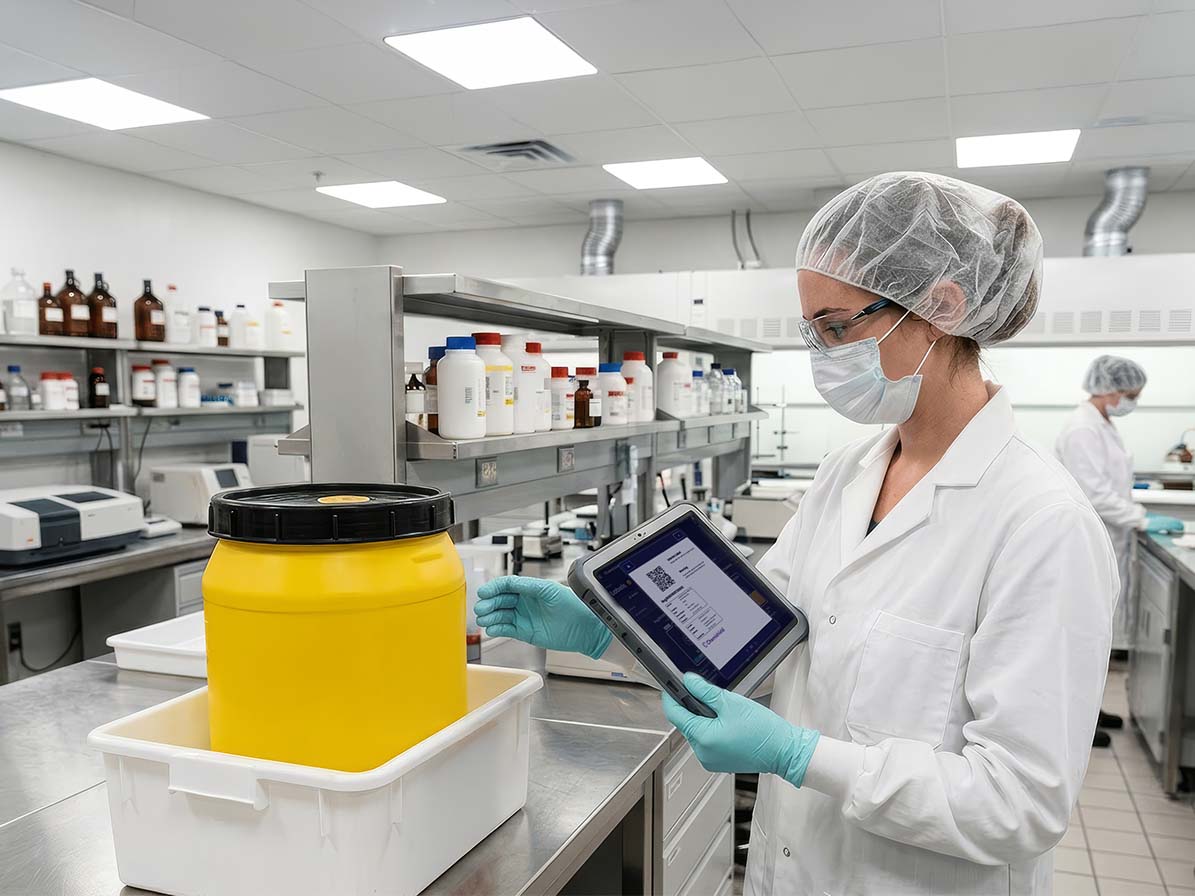
A digital system of record, such as Chemishield, creates standardised, CLP-compliant digital labels and QR codes for each container, linking them to chemical identity, hazard class, generator, and accumulation start date. This approach streamlines waste management and reduces stress.
Chemishield ensures waste is fully traceable and verifiable from creation, eliminating uncertainty and reducing risk.
Waste Records That Don’t Stand Up to Scrutiny
Hazardous waste audits are documentation audits. Inspectors expect to see:
- Waste generation logs
- Accumulation start dates
- Container inspection records
- Manifests or consignment notes
- Certificates of disposal
- Full chain-of-custody documentation
Instead, inspectors often find missing records, retroactively completed spreadsheets, incomplete paper logs, and multiple versions of documents.
A platform such as Chemishield consolidates records into a single digital system, enabling instant report generation when auditors request documentation.
Waste Storage and Segregation Failures That Put Safety at Risk
Many audit findings are not only administrative but also safety violations. Inspectors routinely identify:
- Incompatible chemicals stored together
- Open or overfilled containers
- Waste stored outside approved accumulation areas
- Containers exceeding time limits
These failures occur because most facilities lack real-time visibility into waste storage locations and durations.
Chemishield enforces segregation rules at the point of generation and automatically tracks accumulation time. Storage locations are logged digitally, providing facilities managers with greater assurance that safety and compliance are maintained and reducing concerns about violations.

“Who’s on First?” The Waste Accountability Gap
A critical moment in any audit occurs when an inspector asks, “Who generated this waste?”
If the answer is not immediate and documented, the facility is at risk.
Chemishield assigns each container to a specific individual and location, ensuring ownership remains clear even when staff change roles or leave the organisation.
Waste Vendor Handoffs That Create Compliance Exposure
Audits do not end at your loading dock. Inspectors review manifests or consignment notes, waste codes, downstream treatment records, and disposal certificates.
If vendor documentation does not match your records, your facility remains legally liable. This can lead to rejected shipments, unexpected disposal surcharges, compliance violations, and regulatory investigations.
Chemishield provides a verified digital handoff between your facility and your waste vendor. Waste data is validated before collection, manifests or consignment documentation are generated automatically, and the chain of custody is maintained through final treatment.
What Audit-Ready Facilities Do Differently
Audit-ready facilities maintain a constant state of readiness rather than preparing only before inspections.
These facilities use digital infrastructure instead of paperwork, employing digital waste tracking to enforce segregation, labelling, and storage standards automatically. They maintain real-time records with complete chain-of-custody visibility and can produce documentation within seconds.
Audits become routine rather than disruptive, and compliance is integrated into daily operations rather than treated as a periodic concern.
The Bottom Line
Most facilities fail waste audits because they rely on legacy processes and lack a proper system of record.
Hazardous waste compliance is now a data challenge, not a paperwork issue. Data problems require digital solutions. If your lab or facility still manages waste with paper, spreadsheets, or disconnected tools, audit failure becomes a matter of when, not if.
Chemishield transforms hazardous waste management from a compliance liability into a digital, auditable, inspection-ready system that covers every stage from generation to disposal.








.avif)