Mandatory Digital Waste Tracking
Is Your Business Ready?
The UK’s mandatory Digital Waste Tracking (DWT) system will soon require every waste movement from generation through final treatment to be digitally recorded, transforming compliance, improving traceability, and eliminating manual processes.




What is Digital Waste Tracking?
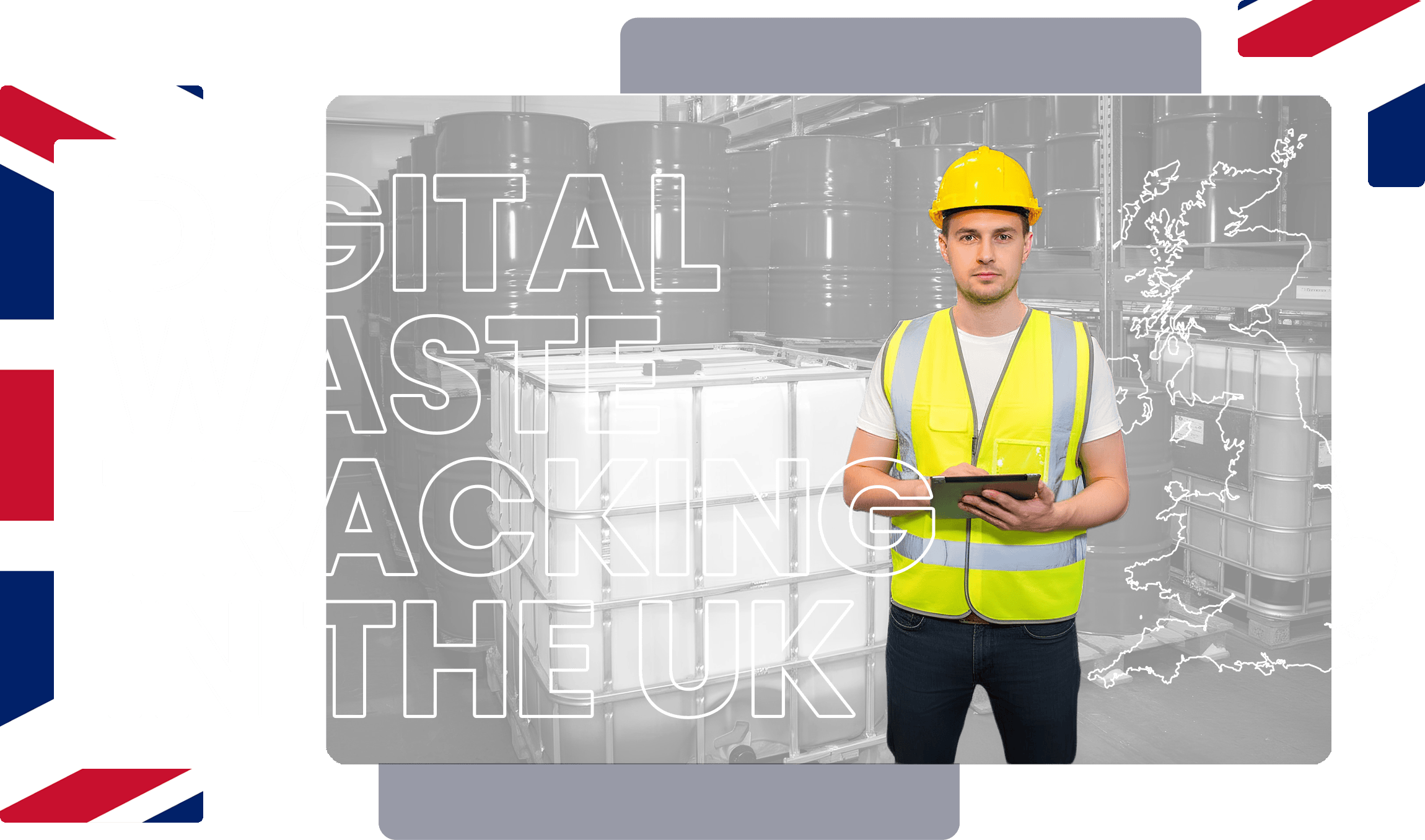
Digital Waste Tracking is a new UK mandate requiring every waste movement to be logged digitally with a unique tracking ID. It replaces paper consignment notes and outdated manual processes, creating a complete cradle-to-grave audit trail. DWT begins rolling out in October 2026 for waste-receiving sites, with broader adoption starting April 2027.
If your facility generates or handles waste in the UK, DWT is the new compliance baseline. Read the full government guidance on mandatory Digital Waste Tracking.
Autumn 2025
Private beta testing starts with selected waste operators.
Spring 2026
Public beta opens for all permitted/licensed waste-receiving sites.

October 2026
DWT becomes mandatory for permitted/licensed waste-receiving sites.
April 2027
Expansion to include carriers, brokers, dealers, and exempt sites (details to be confirmed).

How Mandatory Digital Waste Tracking
Impacts the Entire Waste Ecosystem
Laboratories and R&D
Paper notes are replaced with digital records for every movement. Waste producers must confirm accurate descriptions, volumes, and collection details, while receiving sites log intended treatment routes.
Waste Carriers, Brokers & Dealers
Carriers become key data handlers, entering or updating movement records and confirming collections on time. DWT replaces traditional transfer notes, increasing transparency and reducing misreporting.
Manufacturing & Industrial Producers
All controlled waste will be digitally tracked from the moment it’s produced. Manufacturers must classify waste correctly and submit movement details before it leaves site. Receiving facilities will confirm how the waste will be managed.
Waste Treatment, Disposal & Recovery Sites
This is the first group required to adopt DWT. From Oct. 2026, all permitted or licensed receiving sites must digitally record every load and its intended treatment. Traditional site and hazardous waste returns will be phased out.
The Producer's Role in Digital Waste Tracking
Starting October 2026, all UK waste-receiving sites must record incoming loads in the DWT system. To do that, carriers need a digital record for every movement — information that only waste producers can provide. Waste producers aren’t legally required to use DWT yet, but in practice, they’ll have to. Without their digital data, the entire compliance chain fails.
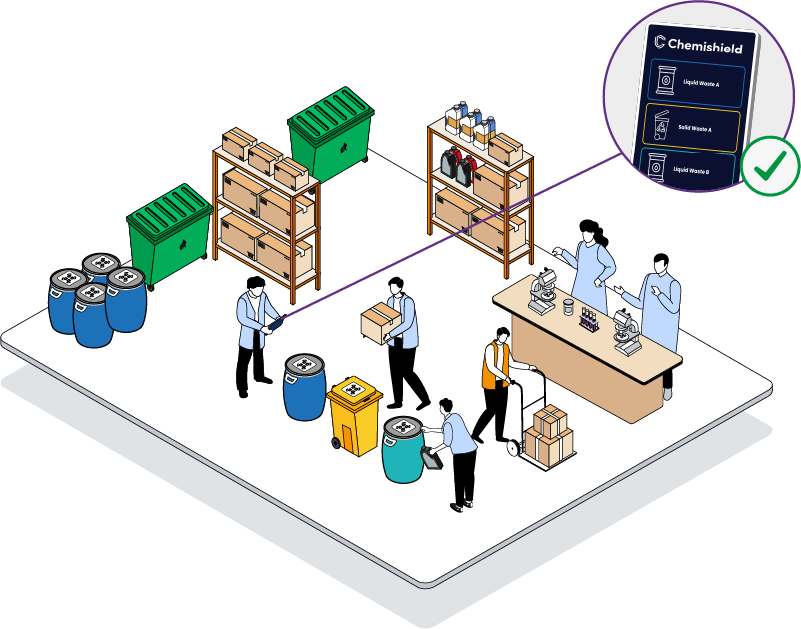
Step 1: Waste Generated
Waste is generated in your facility. Using Chemishield, key data (EWC code, composition, weight, origin) is logged at the source, creating a verified digital record for every container.
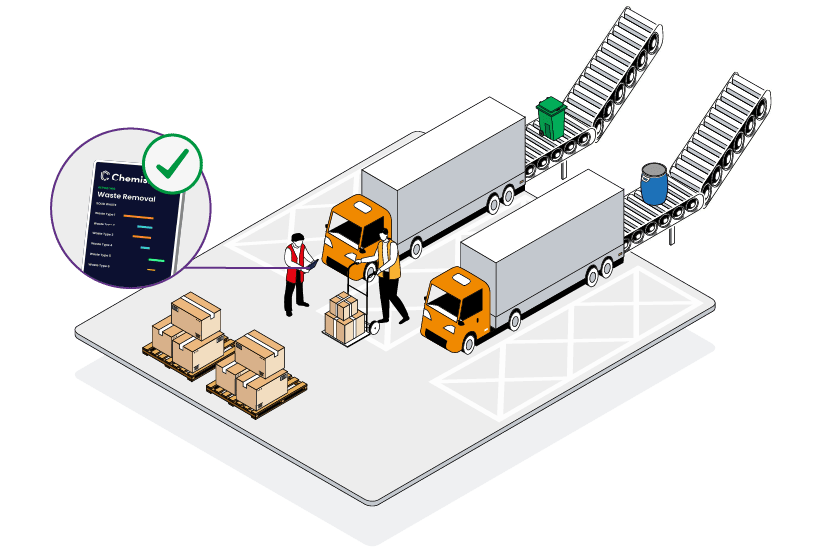
Step 2: Digital Record Received
The waste carrier receives your verified digital record and instantly generates a compliant digital consignment note for transport.
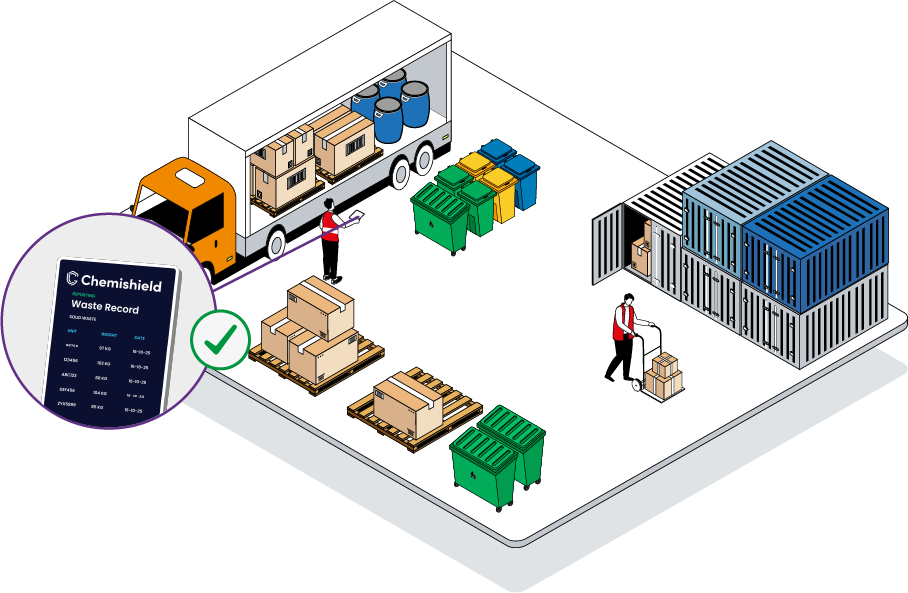
Step 3: Waste is Received
The waste receiving site collects the carrier's digital record and logs the waste into the national DWT system.
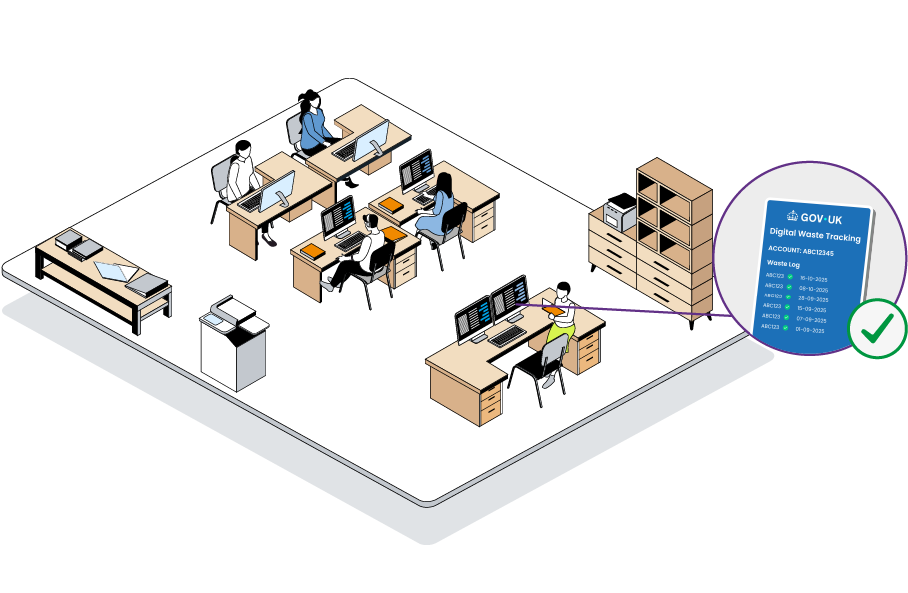
Step 4: Digital Record Received
Regulators gain full visibility into waste movements, prevent waste crime, and inform circular economy policy.
Without Digital Input, Manual Data = Compliance Breakdown
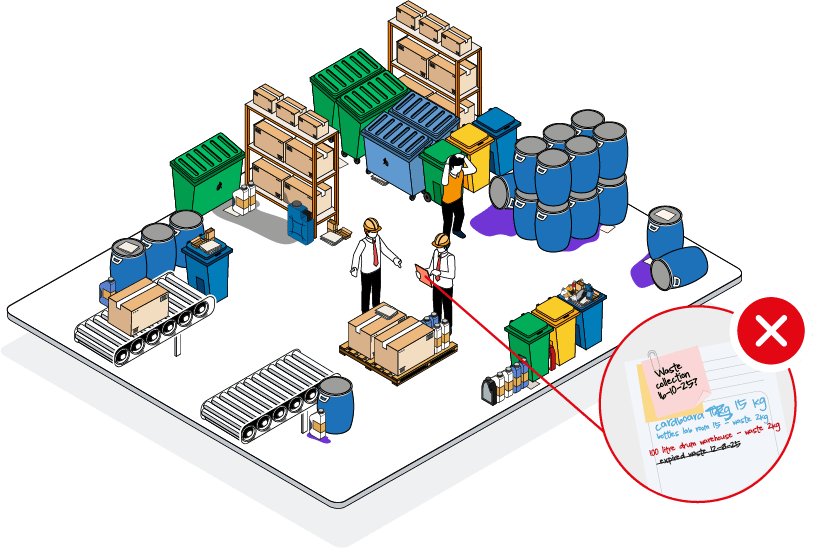
The waste producer records waste using outdated, manual paper logs or spreadsheets.

The waste carrier is unable to create a compliant record for DWT submission without verified digital data, causing the entire process to grind to a halt.
Prepare for Digital Waste Tracking with Chemishield
Chemishield is a SaaS platform that automates hazardous waste segregation, tracking, and management from generation through final treatment, offering compliance with Digital Waste Tracking from the start.

Ensure Continuity
Provide waste carriers with the verified, DWT-ready data they need to collect waste on time.
Guarantee Compliance
Maintain a complete, auditable digital record for every waste movement.

Mitigate Risk
Avoid costly operational stoppages and DWT non-compliance penalties.

Unlock Value
Turn waste compliance data into valuable ESG and performance insights.
Frequently Asked Questions
What types of waste are covered under DWT?
DWT covers the movement of all controlled waste and extractive waste, including household, commercial, industrial, hazardous, and non-hazardous waste. Some exceptions apply, but these do not remove the requirement for downstream tracking.
Which industries will be most impacted by Digital Waste Tracking?
All industries that produce or handle waste will be affected. Those dealing with hazardous, regulated, or high-volume waste streams—such as biotech, pharmaceuticals, manufacturing, healthcare, and petrochemicals—will experience the most operational change due to the level of information required.
What can waste producers in the UK do now to ensure compliance with DWT?
Waste producers in the UK should begin preparing for mandatory Digital Waste Tracking by:
- Mapping their waste processes end-to-end.
- Identifying gaps in classification or record-keeping.
- Engaging carriers and waste vendors on their DWT plans.
- Piloting digital tools like Chemishield to improve accuracy and readiness.
These steps align with the government's emphasis on data quality and producer confirmation responsibilities.
What kind of technology is needed to comply with DWT?
A digital device with internet access is the minimum requirement. Organisations with more complex waste streams will benefit from dedicated waste management software that integrates with DWT via API, such as Chemishield.
How long will it take my facility to prepare for DWT?
Preparation time varies by organisation size and complexity. Smaller sites may adapt quickly, while larger or multi-site operations may need several months to standardise processes, train staff, and align systems.
How can Chemishield help with Digital Waste Tracking compliance?
Chemishield digitises waste segregation, labelling, and chain of custody at the source, where errors most commonly occur. It creates structured, audit-ready data that can integrate with DWT via API and supports organisations in standardising waste handling before the mandate.
mandatory Digital Waste Tracking.







.avif)