The Hidden Complexity of Hazardous Waste Handovers
4 min read
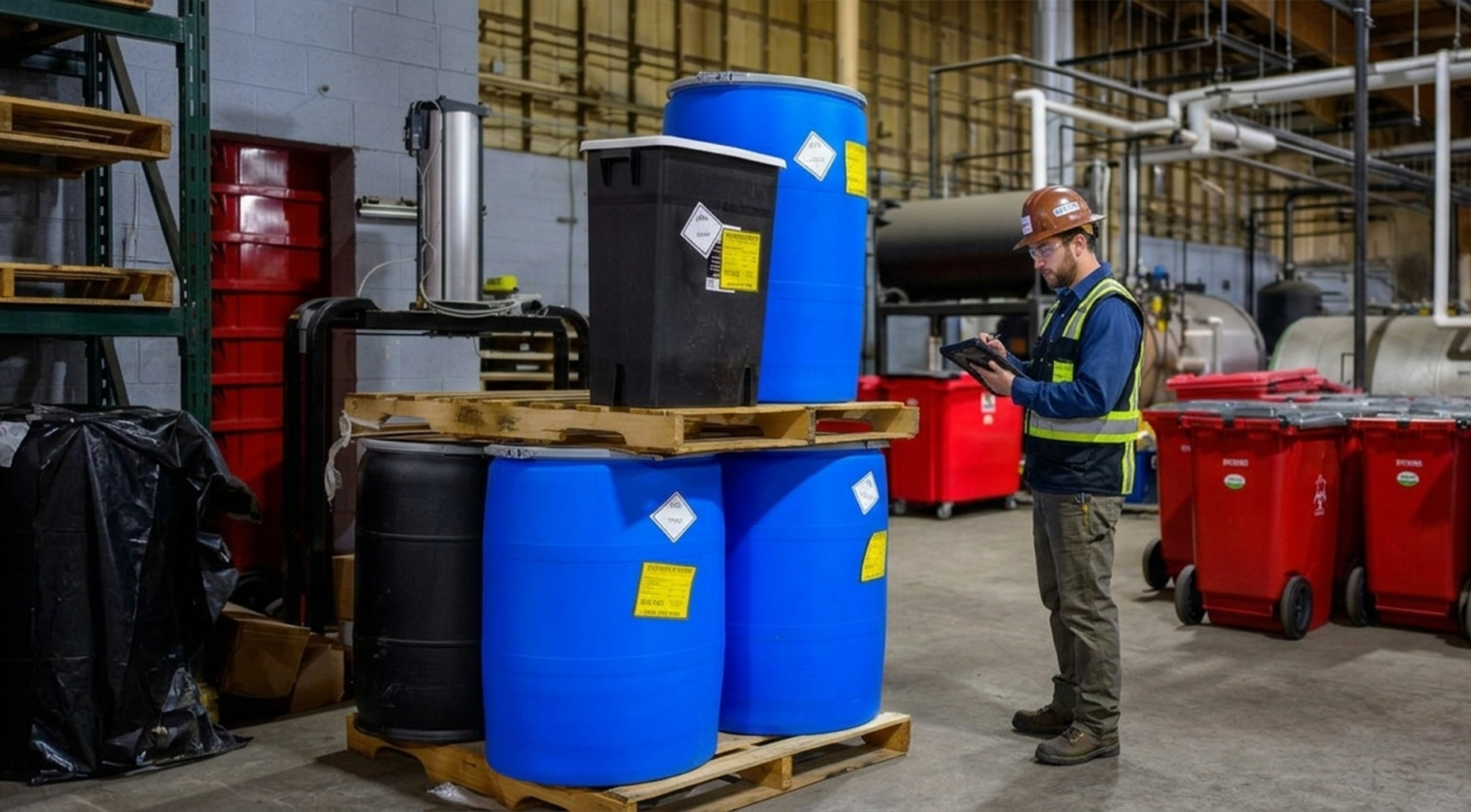
At first glance, waste collection seems straightforward. The vendor shows up, loads containers, signs paperwork, and drives away.
But this impression can be misleading.
Beneath every hazardous waste handover is a layered sequence of physical, informational, and regulatory transfers. Each step introduces new accountability, new documentation, and often a new system disconnected from the last.
Failures rarely occur at the drum but at the handoff, when responsibility and information must transfer together.
What Is a Hazardous Waste Handover?
A hazardous waste handover is a chain of custody, not a single event.
Waste moves from the point of generation — a laboratory bench, production floor, or maintenance bay — to EHS for classification and staging. It then transfers to site operations for storage and consolidation, is collected by a vendor, transported by a licensed carrier, and received by a treatment, storage, or disposal facility. Regulators ultimately require a complete record of this process.
At each transfer, three elements must move together:
- The physical waste
- The data describing it
- The accountability for what happens next
Compliance risks arise when these elements are misaligned.
Where Waste Manifest Errors Begin
Most manifest errors emerge from discrepancies between where information is stored and how it must be presented during transfer.
Many facilities maintain waste classification in spreadsheets, manually re-enter manifest data, duplicate input in vendor portals, and manage approvals by email.
Each manual data entry increases risk: waste codes may be copied incorrectly, quantities may be entered in the wrong units, or container counts may be outdated. Outdated codes further complicate matters. EWC classifications and RCRA waste codes change over time, but static spreadsheets and templates do not.
If a waste stream is reclassified under a new EWC code but the spreadsheet is not updated, the manifest will contain outdated information. The treatment facility may identify the discrepancy at intake, leading to the load being held, clarification requests, and increased costs.
No negligence occurred, but the process relied on fragmented documentation.
Collection Day: When Latent Risk Becomes Real
On collection day, minor documentation gaps can create significant operational risks.
Drivers follow strict schedules, site coordinators manage competing priorities, and containers are staged in multiple areas. Under time pressure, minor discrepancies can escalate quickly.
Common issues include:
- Containers not included in the original manifest
- Degraded or missing labels
- Mismatched container counts
- Last-minute additions
On-the-spot manifest edits create records that are difficult to reconcile later and cannot be audited in real time.
Digitising these documents after the fact preserves confusion instead of creating a verified record of transfer.
Many EHS leaders do not recognise this risk until a regulator or insurer requests documentation clarity they cannot provide with confidence.
Regulatory Pressure Is Accelerating
The regulatory shift toward digital reporting is now a reality.
In the US, the EPA’s e-Manifest system requires structured, accurate, and timely electronic submission of hazardous waste transfer data. Hybrid paper-digital workflows create reconciliation burdens and increase the risk of submission errors or late filings.
In the UK, DEFRA’s Digital Waste Tracking mandate, scheduled for implementation in 2026, will require the digital recording of waste movements across the supply chain. Paper consignment notes will not satisfy future requirements.
Regulators are establishing digital visibility into waste movements. Manual and disconnected workflows are increasingly out of alignment with these requirements.
Why Waste Vendors Absorb Disproportionate Risk
Operationally, waste vendors bear a significant share of the consequences created upstream.
If a manifest arrives incomplete, the vendor must decide whether to proceed. If waste is misdeclared, the vendor’s vehicle and license may be at risk. If a treatment facility rejects a load, the vendor manages the return, renegotiation, and associated costs.
Vendor compliance depends on both their operations and the data quality provided at the point of generation. Weak upstream processes increase downstream risk.
What a Resilient Workflow Looks Like
A resilient waste custody workflow relies on structural integrity, not technological complexity.
The core principle is eliminating unnecessary data transfers. That means:
- Waste classification is entered once at characterisation
- No manual re-keying across documents
- Standardised, centrally maintained EWC and RCRA codes
- Shared visibility between EHS and vendor partners
- Real-time discrepancy resolution before collection day
When manifest data, collection records, facility intake documentation, and regulatory submissions all draw from a single source of truth, transcription risk is eliminated.
A digital, time-stamped, searchable, and continuous audit trail replaces scattered paperwork. Each party can verify what was transferred, when, and under which terms.
Collection day becomes a confirmation rather than a correction.
From Paperwork to Process Integrity
Hazardous waste management is often seen as disposal, but it is actually a controlled transfer of accountability from generation to final treatment.
The complexity of waste handovers is not new, but tolerance for documentation errors has decreased. Regulators are digitising, audit expectations are rising, and data transparency is expanding.
Organisations that treat compliance as paperwork will struggle, while those focused on process integrity will adapt.
EHS leaders must build workflows that do not rely on individual diligence for accuracy. Vendors should partner with facilities whose upstream data matches the discipline of their own operations.
The handover is not the end of a process; it is the test of one.
Where Chemishield Fits
Chemishield is designed to strengthen the transfer process.
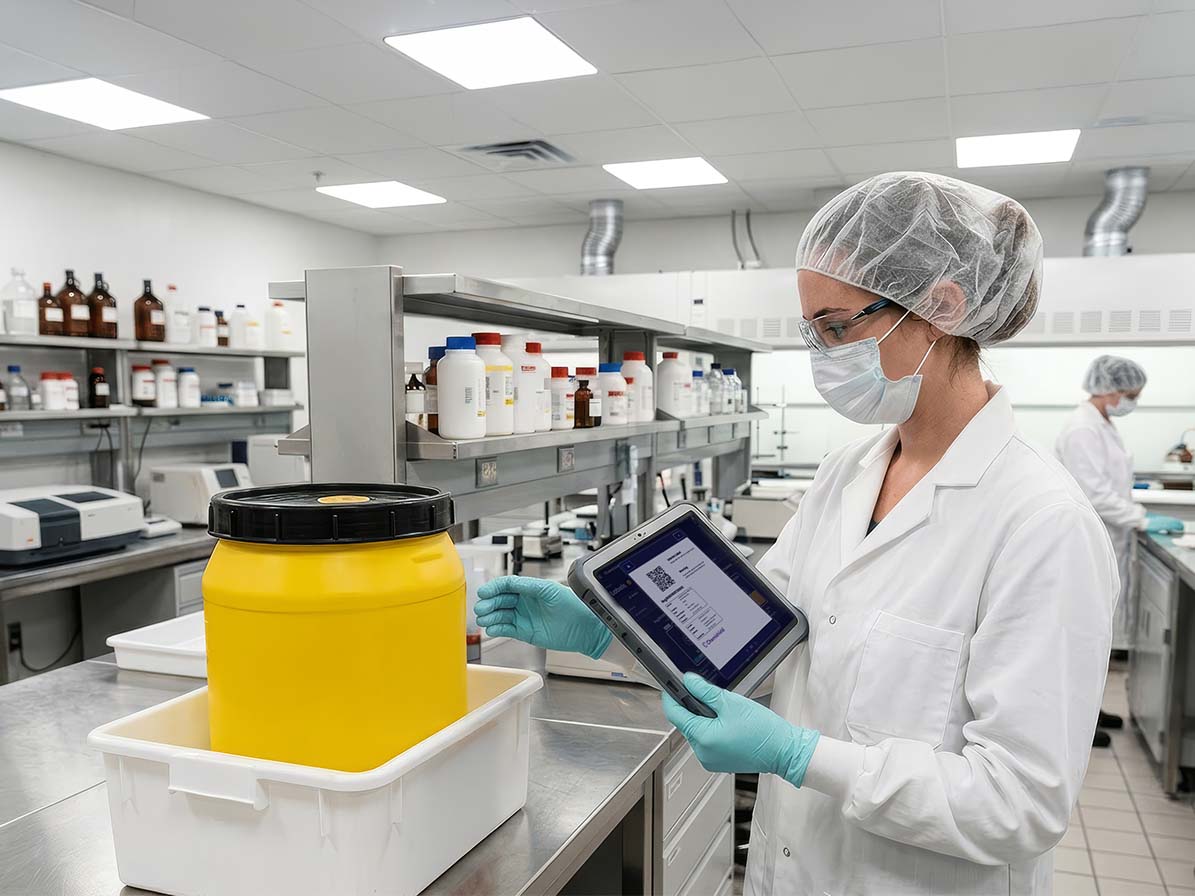
By digitising waste classification at the point of generation and maintaining structured data through storage, collection, and final treatment, Chemishield eliminates re-keying, removes version confusion, and creates a continuous digital chain of custody.
Instead of assembling manifests from spreadsheets and emails, documentation comes from a single, verified source of truth.
EHS teams gain real-time visibility, and vendors receive accurate, standardised data before collection day. Audit trails are time-stamped, searchable, and regulator-ready.
As digital reporting and real-time oversight become standard, resilient handovers are essential operational infrastructure. Chemishield ensures this infrastructure remains reliable both upstream and downstream.








.avif)