Beyond PPE: Addressing Hazardous Waste in Your Lab Safety Strategy
3 min read
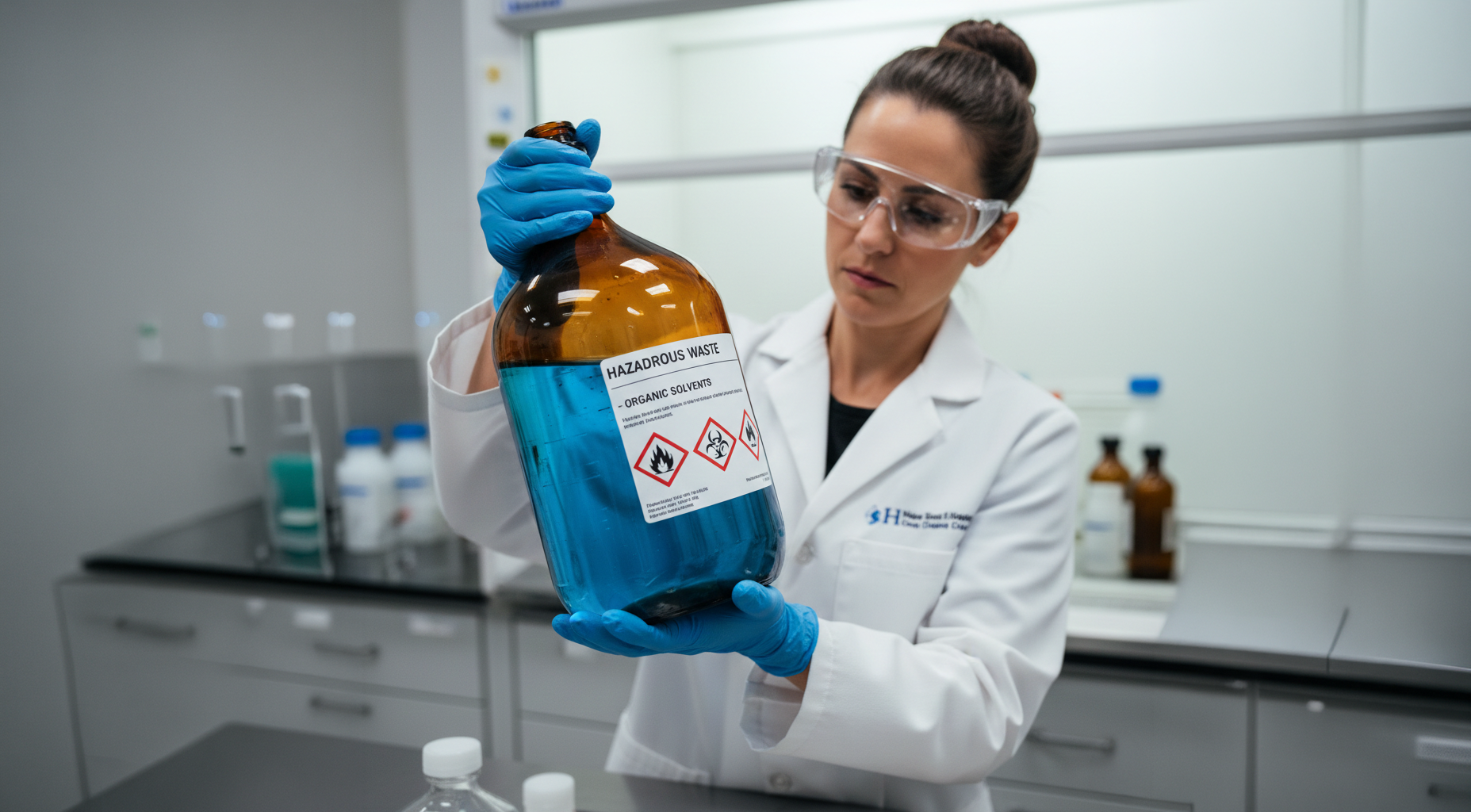
Laboratory safety extends beyond personal protective equipment.
Goggles, gloves, and fume hoods protect people in the moment, but some of the most serious risks in a lab don’t announce themselves right away. They build quietly in waste containers, storage areas, and neglected handwritten logs.
Few areas of lab operations are as underestimated—and as critical—as hazardous waste management.
In fast-paced labs, waste is generated continuously during experiments, cleaning, maintenance, and routine operations. Each container reflects decisions about contents, classification, compatibility, and storage duration, often made under pressure.
When those decisions rely on memory, tribal knowledge, or incomplete information, risk compounds quickly.
Common Breakdowns in Hazardous Waste Safety
Most lab incidents involving hazardous waste stem from gaps in systems.
- Inconsistent classification: Team members may classify the same waste differently, especially when guidance is difficult to access. This can result in incompatible materials being stored together or handled improperly.
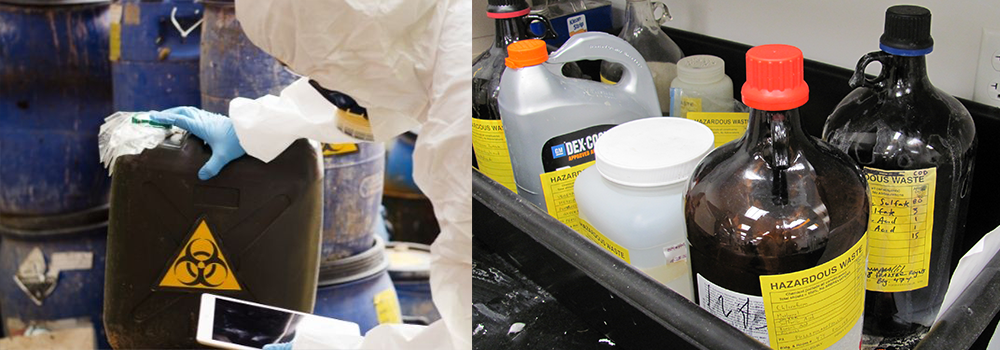
- Unclear or incomplete labelling: Handwritten labels may fade, detach, or lack essential hazard information. Subsequent handlers may not know the contents or associated risks.
- Limited visibility into accumulation areas: Containers get forgotten. Storage limits are exceeded. Timelines quietly slip past regulatory thresholds. What started as “temporary” can become dangerous without active monitoring.
- Fragmented recordkeeping: When waste data is spread across logbooks and spreadsheets, accountability erodes. During inspections or emergencies, teams must reconstruct records rather than respond efficiently.
These issues extend beyond compliance and can lead to spills, fires, chemical exposures, and injuries.
Safer Waste Starts at the Point of Generation
Once ambiguity enters the waste stream, it tends to follow the container all the way downstream.
The safest labs treat waste management as a front-end safety control, not a back-end administrative task. Capturing accurate information at the moment waste is generated reduces reliance on assumptions later, when the stakes are higher.
Consistent waste classification and data capture from the outset reduce the risk of mixing incompatible materials, provide clarity for downstream handlers, and ensure safety decisions are not dependent on institutional memory.
Why Labelling Is a Safety Tool, Not a Checkbox
Accurate labelling is often discussed in regulatory terms, but its real value lies in its operational impact.
A clear, standardized label enables all stakeholders, including lab staff, EHS teams, emergency responders, and waste contractors, to quickly identify the material, its hazards, and appropriate handling or storage procedures.
When labels are incomplete or disconnected from supporting records, that clarity disappears. Safety becomes dependent on who happens to be available to answer questions in the moment.
Visibility Prevents Incidents Before They Happen
Properly classified and labelled waste can still become hazardous if not actively managed.
Without real-time visibility into container status, accumulation areas, and storage limits, labs may only identify issues during inspections, after near misses, or following a safety incident.
Active oversight and real-time visibility enable teams to address issues early, preventing escalation into serious safety events.
The Role of Digital Systems in Lab Safety
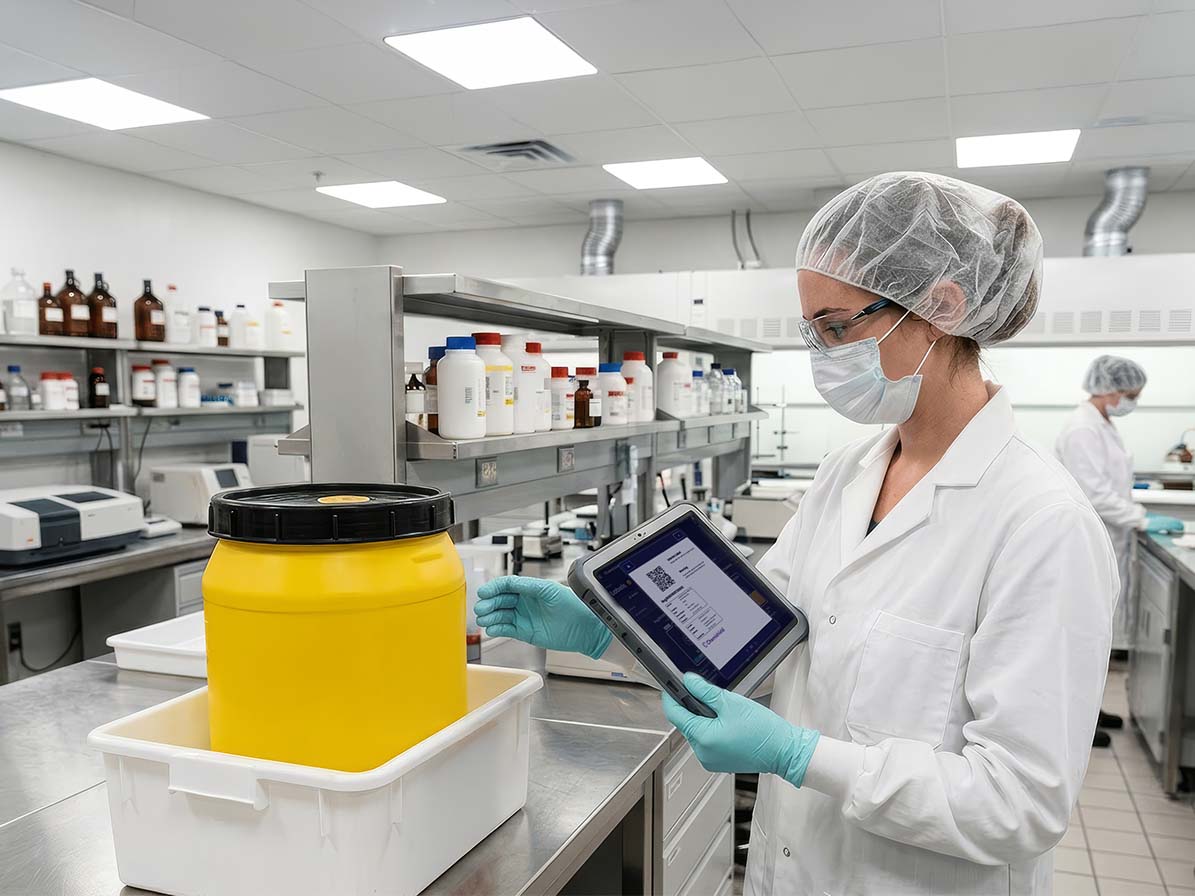
Platforms like Chemishield structure waste classification, labelling, storage tracking, and recordkeeping into guided workflows. This reduces reliance on memory, manual checks, and fragmented documentation, integrating safety into daily operations.
This approach results in fewer unknowns, greater accountability, and safer conditions for all personnel handling hazardous materials.
Safety Is a System, Not a Slogan
A strong lab safety culture is demonstrated by consistent risk management, even without direct oversight. When hazardous waste processes are transparent, visible, and integrated into daily workflows, safety becomes an inherent part of lab operations.
The safest labs are not those with the most rules, but those where procedures are clear and leave no room for interpretation.








.avif)