
From Reactive Waste Handling to Proactive Safety: A New Era for EHS Leaders
PUBLISHED
Most laboratory safety programmes focus on front-line measures such as PPE, fume hood discipline, chemical-handling protocols, and spill response drills.
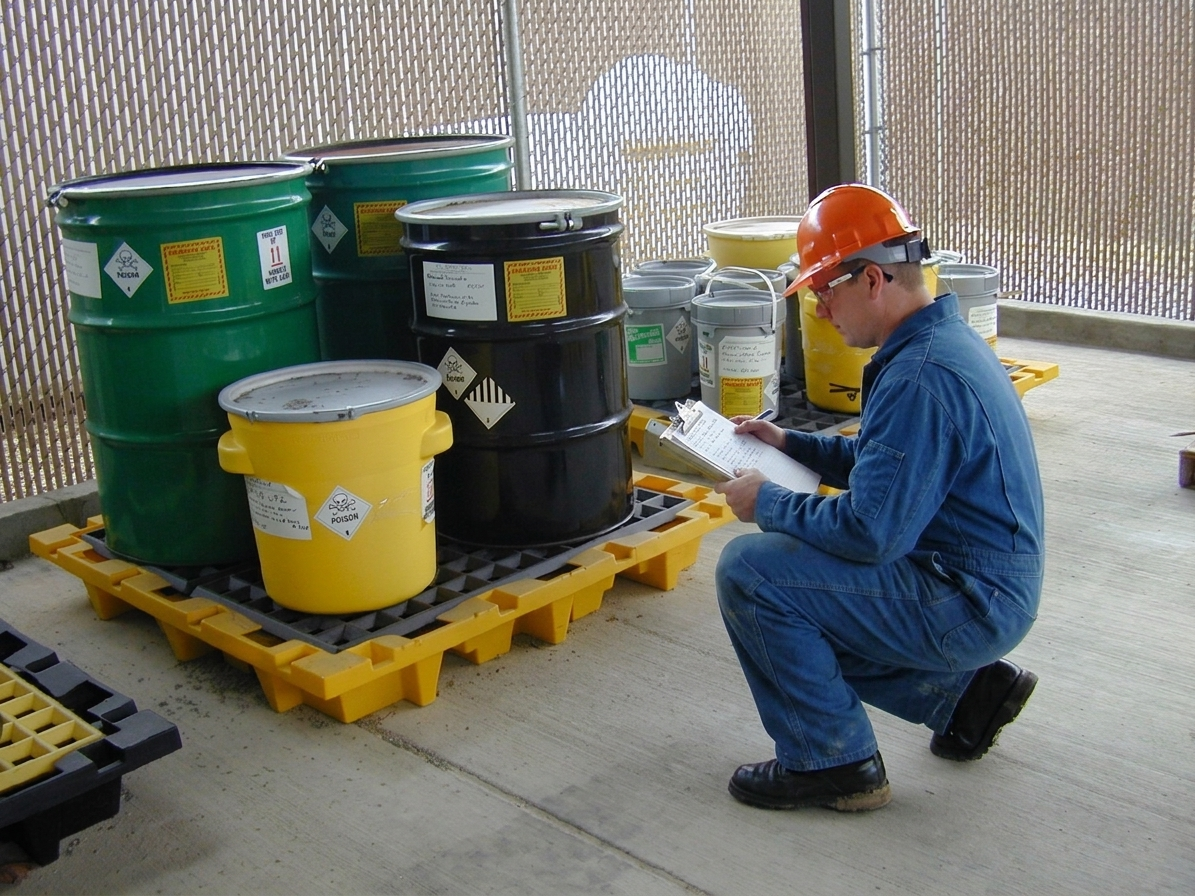
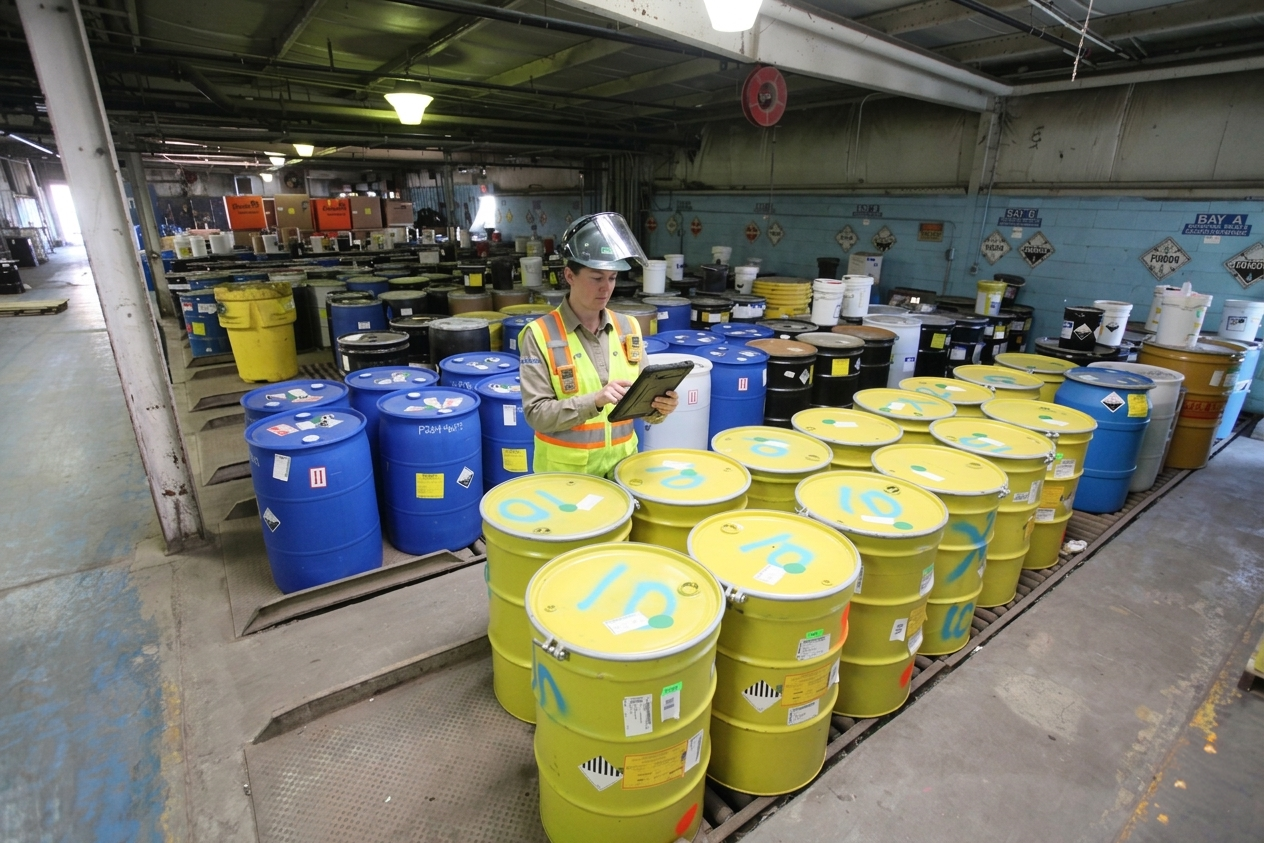
However, many serious incidents originate in the waste stream: a partially labelled carboy, a drum stored beyond recommended timeframes, or a technician uncertain about proper solvent segregation.
Individually, these may seem like minor operational issues. Collectively, they represent a significant and often underestimated safety risk, as well as an increasing compliance liability as regulations become more stringent.
If your EHS programme treats waste handling as an operational afterthought, it carries hidden risks. The following guidance outlines how to address these gaps.
The Four Silent Risk Compounders
Waste incidents rarely result from a single error. Instead, they arise from small, recurring gaps that accumulate over time.
- Inconsistent waste segregation: Despite clear SOPs, waste segregation decisions are often made quickly and under pressure by rotating staff. A single miscategorised solvent in a flammables drum can alter the risk profile of an entire storage area.
- Unclear or incomplete labelling: Handwritten labels can fade, smudge, or become detached. When a container cannot be positively identified, it becomes "mystery waste," requiring costly characterisation testing before legal disposal.
- Manual tracking: Paper logbooks and fragmented spreadsheets create information gaps between the bench and central storage. EHS leaders may remain unaware of the generated waste until an issue arises.
- Delayed disposal: Overfilled containers, overaccumulated drums, and missed pickup windows increase the risk of leaks, chemical reactions, and regulatory violations, particularly as time limits for accumulation become stricter.
Each issue may appear minor in isolation, but together they contribute to a shared risk environment. When multiple factors coincide, the likelihood of near-misses or incidents increases significantly.
From Downstream Tracking to At-source Governance
The most impactful change EHS teams can make is to govern waste before it enters a drum, rather than recording it only after disposal.
This approach shifts from downstream tracking, which reports disposals after the fact, to at-source governance, which validates each disposal at the point of generation using compatibility checks and standardised labelling.
At-source governance reduces the cognitive burden on technicians. Each disposal is verified in real time against the container’s contents, ensuring incompatible combinations are identified before disposal occurs.
This is similar to the difference between a smoke detector, which alerts you to a problem, and a sprinkler, which prevents the problem from escalating.
Five Practical Moves That Reduce Incidents
For EHS teams seeking to strengthen waste handling as a safety control, the following five interventions are consistently effective:
- Standardise labelling at the point of generation. Use CLP-compliant, QR-enabled labels created digitally at the point of disposal, ensuring each container is traceable, legible, and auditable from the moment of creation.
- Integrate compatibility checks into the disposal process. Implement a two-step validation: the technician scans the container, declares the waste, and the system confirms compatibility before authorising disposal.
- Close the data black hole. Replace paper logs with a live digital record that EHS can see in real time across every lab and site. Incidents you can see coming are incidents you can prevent.
- Automate enforcement of accumulation limits. Allow the system to flag containers nearing volume or time thresholds, reducing reliance on manual checks.
- Link procurement to disposal. A mass-balance approach, matching incoming materials to outgoing waste, enables the system to identify anomalies before they become audit issues.
These interventions are now operationally achievable at scale through purpose-built software such as Chemishield, rather than requiring custom internal IT solutions.
Regulation is Closing the Gap
For EHS leaders building an internal business case, upcoming regulatory changes further support the need for action:
- United States: The EPA is formally retiring paper hazardous waste manifests, with e-Manifest expansion taking effect 24 months after the final rule is published.
- European Union: The Digital Waste Shipment System (DIWASS) becomes mandatory on 21 May 2026 for cross-border waste movement notifications.
- United Kingdom: Phase 1 of Mandatory Digital Waste Tracking (DWT) begins in October 2026 for all permitted waste-receiving sites, with carriers, brokers, and dealers following in October 2027.
The common theme across all three regions is that regulators will no longer accept paper logs, illegible labels, or reconstructed audit trails.
A compliant waste workflow is now synonymous with a safer workflow.
In the coming years, leading facilities will treat every waste disposal event as a controlled process: governed, validated, and recorded at the source. For EHS leaders, this means fewer near-misses, improved audit outcomes, reduced disposal costs, and a workforce able to focus on scientific work rather than administrative tasks.
How Chemishield Can Help
Chemishield transforms hazardous waste management from a disjointed operational burden into a transparent, automated safety control.
By bridging the gap between the laboratory bench and central waste storage, our software enables your team to move beyond reactive tracking and into proactive at-source governance.
- Real-Time Visibility: Eliminate the "data black hole" caused by paper logs and fragmented spreadsheets. Chemishield provides a live digital record, allowing EHS managers to monitor waste generation across every site, lab, and department in real time.
- Automated Compliance: From CLP-compliant, QR-enabled labelling at the point of generation to automated compatibility checks, Chemishield ensures that every disposal is valid, documented, and safe before it ever enters a drum.
- Audit-Ready Documentation: Chemishield generates an immutable, digital audit trail, ensuring you are prepared for inspections without the frantic need to "reconstruct" logs.
- Reduced Administrative Burden: By reducing the cognitive load required for waste segregation and labelling, your team can focus on their core scientific work rather than navigating complex compliance paperwork.
- Seamless Integration: Chemishield is purpose-built to be intuitive and scalable, allowing you to implement a robust, modern waste management solution without heavy, time-consuming IT overhead.
By digitising your waste stream with Chemishield, you aren't just checking a box for compliance—you’re building a culture of safety that protects your people, your facility, and your reputation.