
The 9 Most Common RCRA Violations and How Chemishield Addresses Them at the Source
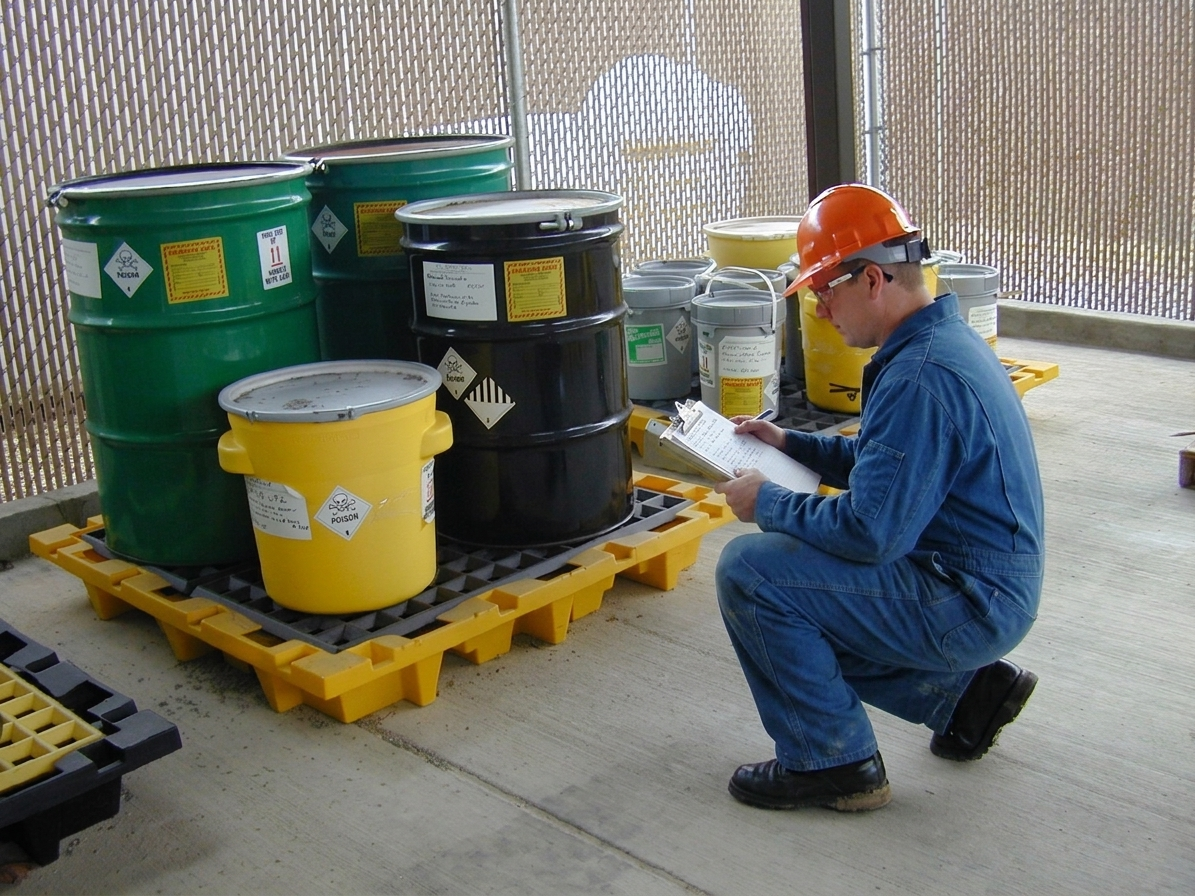
EHS managers are rarely kept up at night by catastrophic spills. Instead, it is often minor issues, such as an undated drum, untrained staff handling waste, or missing manifest copies.
These routine issues frequently appear on EPA inspection reports. As paper manifests are phased out and electronic reporting becomes mandatory, these problems are increasingly difficult to conceal.
1. Improper RCRA Waste Disposal
Few violations are as direct or avoidable as pouring hazardous waste down the drain or dropping a half-empty reagent bottle into the general trash. It happens more often than compliance leaders would like to admit, and it's seldom due to negligence.
Staff often make waste disposal decisions under time pressure without access to reference data or clear procedures. By the time violations are discovered during inspections or TSDF rejections, it is difficult to trace the source.
Chemishield addresses this issue at the source. Each waste stream is pre-mapped to its regulatory classification, and every disposal follows a QR-guided workflow at the point of generation. When a technician scans a container, the platform verifies compliance and prevents non-compliant actions.
At-source governance isn't about documenting violations after the fact. It's about making the right disposal the only option available.
2. Inadequate Hazardous Waste Manifests
Manifests are a common point of compliance failure. A missing record or a mismatch between on-site logs and the final disposal manifest often results in citations. With the Third Rule now in effect, key reports must be filed electronically through RCRAInfo.
3. Inadequate Employee Training
Under 40 CFR 262.17, Large Quantity Generators must train all employees with hazardous waste duties at hire and annually. Inspectors routinely request training records, and any gap can result in a citation. High turnover increases the risk of non-compliance.
Chemishield streamlines training by guiding each disposal through a QR-driven, step-by-step process. New staff achieve compliance more quickly compared to traditional SOP binders.
Chemishield also creates a comprehensive behavioral record. Every scan, disposal, and override attempt is logged to the user. Compliance managers have verifiable evidence of correct waste handling, not just certificates on file.
4. Improper Labeling
Labeling is the most frequently cited violation due to the many ways labels can be non-compliant. Examples include a container marked "Hazardous Waste" without an accumulation start date, faded handwritten descriptions, or missing hazard pictograms. Any of these can result in a citation.
Chemishield provides each container with a GHS-compliant QR label printed on demand, including hazard pictograms, waste description, accumulation start date, and generator information. The machine-readable label allows users to access the full compliance history, including user actions and dates, with a single scan.
5. Open (or Leaking) Containers
40 CFR 265.173 clearly states that hazardous waste containers must remain closed except when adding or removing waste. Despite this, open containers are still among the most frequently cited violations.
A funnel is left in a drum between additions because it's faster. A damaged lid that was never logged. A cracked secondary container that was missed because the person conducting the walk-through was juggling other tasks.
Chemishield digitizes weekly inspections, providing guided, timestamped, and photo-documented workflows. Any flagged issue generates an immediate record with location, responsible party, and corrective action. Container status, including fill level, last scan, inspection due date, and storage location, is visible in real time across all sites. Open containers are identified immediately upon scanning.
6. Failing to Comply with Regulations on Ignitable, Reactive, Incompatible, and Expired Wastes
This is where RCRA violations become safety hazards. 40 CFR 265.177 prohibits storing incompatible wastes in the same container. For example, adding acid to a base drum or an oxidizer to a flammable stream can cause dangerous reactions. Such incidents often occur when technicians make decisions without compatibility data. Improperly segregated material becomes "mystery waste," and each drum of it costs thousands to test before it can be disposed of.
Chemishield is purpose-built to prevent this exact issue. The platform performs a compatibility check with every disposal attempt. If the waste is incompatible with the target stream, the software blocks the action and directs it to the correct stream, eliminating guesswork.
7. Lacking Hazardous Waste Determinations on File
Waste determinations are one of those requirements that sound simple on paper and collapse in practice. 40 CFR 262.11 requires a generator to determine whether every solid waste they produce is a hazardous waste and to keep that determination on file. When inspectors request these determinations, they're often stored in someone's email or out-of-date.
With Chemishield, every waste stream is formally documented as structured data. Waste determination becomes a governed workflow with a clear, auditable trail.
8. Failure to Have (or Maintain) a Contingency Plan
Under 40 CFR 262 Subpart M, Large Quantity Generators must maintain a written contingency plan — including emergency response procedures, evacuation routes, emergency coordinator contacts and equipment lists — and distribute it to local emergency responders. While the regulation is prescriptive, its weakness is in the requirement to "maintain" the plan. Plans may become outdated when coordinators leave, equipment is relocated, or new buildings are added. Outdated reference guides often go unnoticed until an emergency occurs.
Chemishield centralizes the operational data required for contingency planning, including real-time waste inventory, container locations, hazard profiles, and personnel records. When updates are needed, the source data is current and structured, ensuring the plan reflects actual conditions. Emergency responders have immediate digital access to onsite information, rather than relying on outdated paper documents.
9. Common Universal Waste Mistakes
Universal waste — such as batteries, lamps, pesticides, mercury-containing equipment, and aerosol cans — has streamlined rules under 40 CFR Part 273. Too often, "streamlined" gets read as "informal," and a category of waste that still requires specific labeling, accumulation tracking, and storage practices ends up being managed manually.
Common violations include boxes labeled "Universal Waste" without specifying the type, use of unapproved abbreviations such as "bat" for batteries, missing accumulation start dates, open lamp boxes with broken tubes, and drums exceeding the one-year accumulation limit.
Chemishield applies the same digital rigor to universal waste as to full RCRA waste. Each container receives a type-specific label, a machine-readable accumulation start date, and an automated one-year countdown that alerts coordinators before limits are reached. Multi-state operations remain compliant with site-specific regulations.
The Pattern Behind RCRA Violations
Almost every common RCRA violation comes from the same root cause — a decision, a label, or a record that relies on paper, memory, or the person closest to the container getting it right under time pressure.
That's the gap Chemishield closes. Every disposal decision is guided, every container is labeled at the source with structured data, and every record is a digital chain of custody.
The Paper Manifest Sunset Rule
The EPA's proposed rule to sunset paper manifests is open for public comment until May 4, 2026, with a compliance date 24 months after the final rule is published.
For organizations still using paper and spreadsheets to manage hazardous waste, the transition will be mandatory, costly, and rushed. For those using Chemishield, compliance is already achieved.
Book a free demo to see how Chemishield's at-source governance eliminates the nine most common RCRA violations before an inspector finds them.









.avif)